
NBA Playoffs : The Conference Finals – A Spectrum of Dominance, From East to West
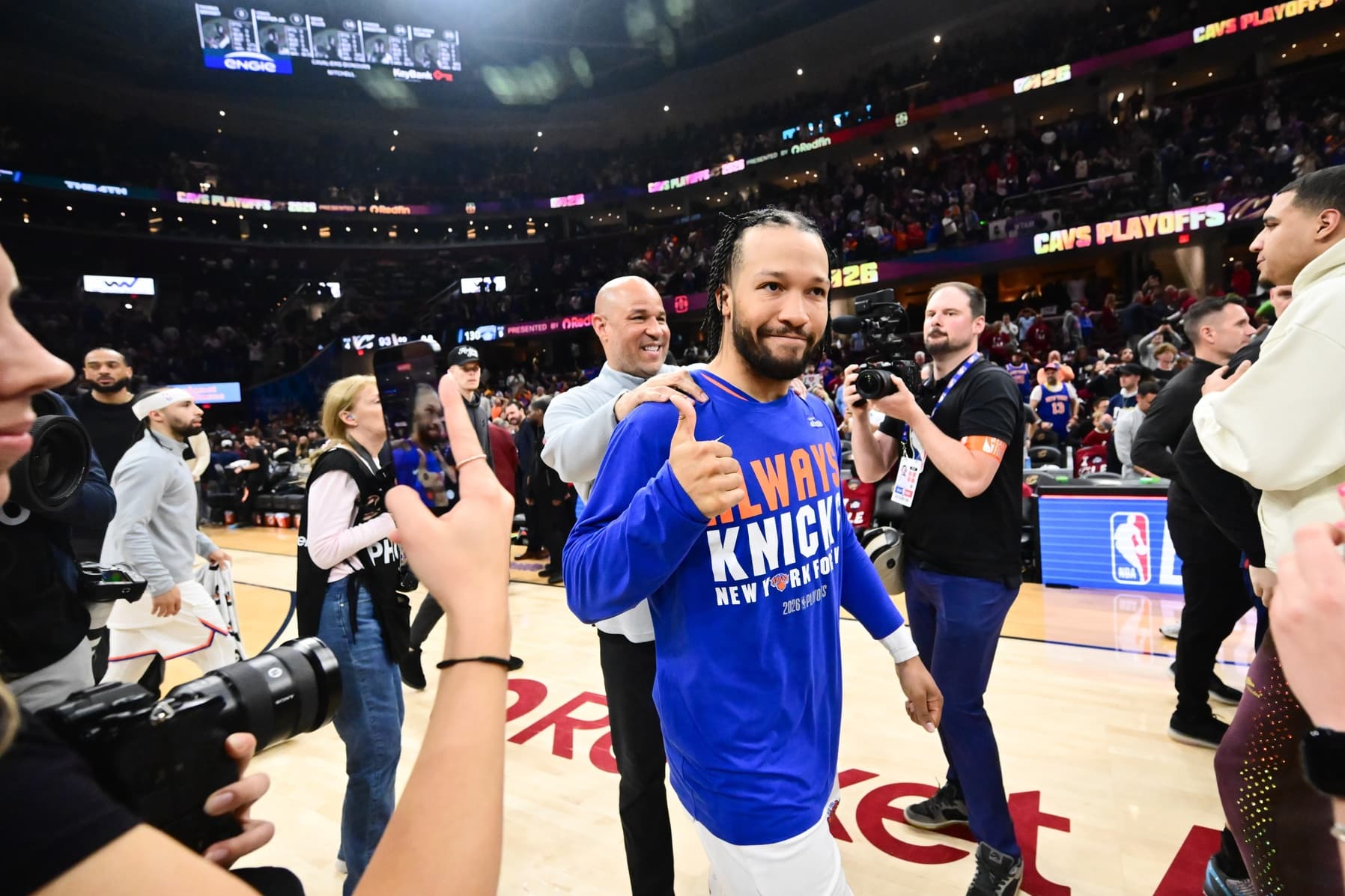
May 25, 2026; Cleveland, Ohio, USA; New York Knicks guard Jalen Brunson (11) reacts after defeating the Cleveland Cavaliers in game four of the eastern conference finals for the 2026 NBA playoffs at Rocket Arena. Mandatory Credit: Ken Blaze-Imagn Images
Let’s start with what happened in Cleveland on Monday night, because it was, in some sense, the easier narrative to digest. The New York Knicks swept the Cleveland Cavaliers, 4-0, advancing to the Finals for the first time since 1999. They won Game 4, 130-93, by basically playing perfect basketball for four quarters. The efficiency margins were staggering: 49% overall, 52.7% from two, 44.2% from three. The Cavaliers, who entered this series as one of the East’s most talented rosters, simply had no answers.
But here’s the thing about sweeps—they can obscure more than they reveal. The most interesting stat from this series might not be the 4-0 record, but rather this: in Game 3, if you subtracted Karl-Anthony Towns‘ 22 points from New York’s total and Dean Wade’s 5 points from Cleveland’s total, both teams scored exactly 108 points. Read that again. It’s a reminder that the Knicks’ championship DNA rests almost entirely on Towns’ ability to function as a perimeter-creating center, a position that didn’t exist a decade ago. Everything else—the Jalen Brunson orchestration, the OG Anunoby wing defense, the Josh Hart rebounding and secondary playmaking—works because Towns can stretch the floor and punish interior defenses from everywhere.
In Game 4, Towns hit 3-of-3 from three-point range. That’s not luck; that’s the gravitational pull of a modernized offensive system. The Cavaliers couldn’t pack the paint to help on penetration because Towns would simply bury them. Meanwhile, Donovan Mitchell‘s 31 points and 55% three-point shooting meant nothing when he finished at -23. That’s the paradox of playing in a system that doesn’t account for versatile wing defenders and positionless basketball. James Harden, an MVP in another era, went 0-for-6 from three. Evan Mobley, a generational rebounder and shot-blocker, was -30.
The Cavaliers’ problem wasn’t talent. It was architectural.
Now, drift west to San Antonio. The Spurs, having lost two straight to Oklahoma City, needed a response. They got one. Victor Wembanyama posted 33 points on 50% shooting, 42.9% from three, with that casual +29 rating that comes when you’re the best player on a court. Wembanyama is now the third player in NBA history to average 30-plus points and 10-plus rebounds through his first four Conference Finals games. The only precedent is Wilt Chamberlain.
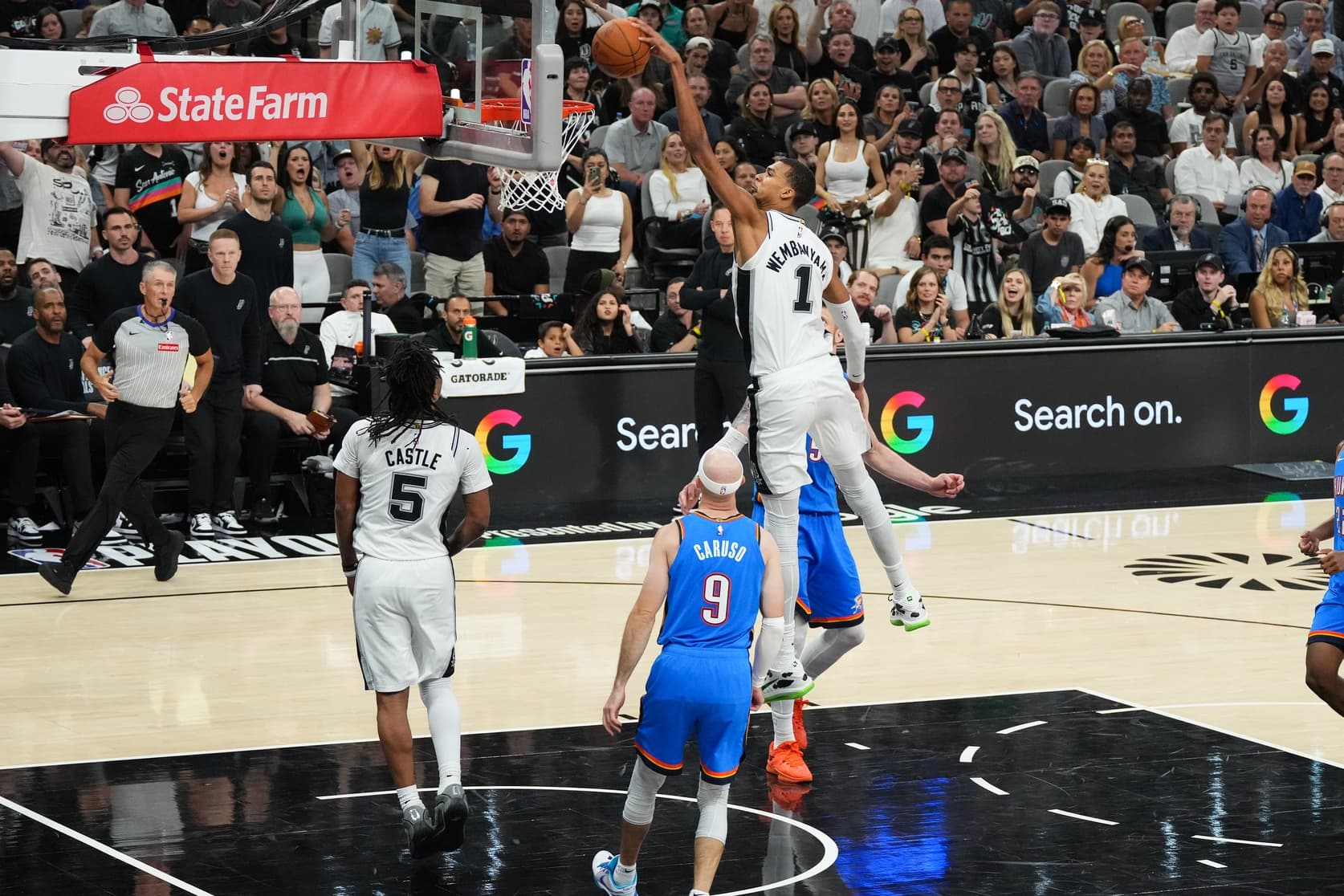
But the real story of Game 4 wasn’t what Wembanyama did; it was what happened to the Thunder around him.
Oklahoma City shot 6-of-33 from three. That’s 18.2%, historically terrible. Shai Gilgeous-Alexander, who finished with 19 points and 7 assists, nonetheless registered a -18 rating—a number that should make Thunder fans uncomfortable. Here’s a time MVP producing solid numbers, on a +/- that suggests he was a net negative in minutes he was on the court. That’s a bench problem. That’s a spacing problem. That’s a defensive matchup problem that Coach Mark Daigneault will be studying intently before Game 5.
The Spurs, meanwhile, were perfect. Eleven steals, ten blocks, 45.6% on two-pointers (a number that speaks to their interior discipline). Devin Vassell and Stephon Castle weren’t asked to be All-Stars; they were asked to be efficient, complementary pieces, and they delivered. San Antonio’s defense was suffocating—not in the way that forces bad shots, but in the way that forces bad decisions.
So what do we take from this weekend? In the East, we have a Knicks team that may be one of the best-built rosters through free agency and trades we’ve seen in this era of modern basketball—a coherent system with genuine stars and no real weak links and completely against he curve of building « homegrown » talent. In the West, we have a series that is exactly as competitive as it looked: two franchises built through meticulous drafting and player developpment, with legitimate shot-making talent, defense on the wings, two coaches willing to make adjustments, and a unicorn who is playing like he’s already seen every playoff situation before.
The Finals matchup—New York against either San Antonio or Oklahoma City—will be a fascinating collision of present-day basketball philosophy. The Knicks are about coherence and role clarity. The winner of the West, whoever it is, will be about whether one superstar (Wembanyama or Gilgeous-Alexander) can operate in a system designed by someone else, against a team that has built a ceiling that doesn’t rely on individual brilliance.
Game 5 tips off Tuesday. It will clarify everything.






















Comments (0)