John Stockton Makes a Final Appeal to the U.S. Supreme Court

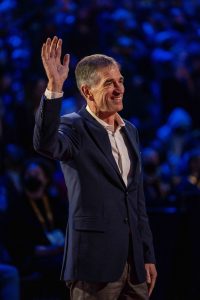
The attorney for former Utah Jazz point guard and 10-time All-Star John Stockton filed a letter Monday with the U.S. Supreme Court in a final effort to have the nation’s highest court review a case involving the former NBA star. The legal dispute centers on a COVID-19-related disagreement and the question of whether the government can sanction doctors for their public statements.
A Legal Battle Over Medical Free Speech
In 2024, Stockton filed a lawsuit alongside two doctors and the nonprofit organization Children’s Health Defense against the Washington Medical Commission and the Washington State Attorney General over its COVID-19 information policies. The two doctors had been sanctioned by the commission for « unprofessional conduct » after publishing their opinions online and in newspapers claiming that « vaccines are dangerous and COVID tests are inaccurate, while promoting alternative treatments that are scientifically proven to be ineffective and even potentially dangerous, » according to the Washington Attorney General’s office.
In 2024, a federal judge dismissed the case, ruling that the plaintiffs’ arguments « are not ripe » and that their « First Amendment and due process challenges are without merit. » However, Stockton and his co-plaintiffs argue that sanctioning doctors for their speech is unconstitutional under the First Amendment.
In May 2025, the 9th Circuit Court of Appeals upheld the lower court’s decision. « We understand that the plaintiffs deeply disagree with Washington’s medical practices and actions. For several reasons, however, we cannot review the merits of the plaintiffs’ constitutional challenges, » wrote Judge Milan D. Smith.
A Last Resort Before the Supreme Court
In their final plea, the petitioners filed a letter Monday in lieu of a reply brief to Chief Justice John Roberts, asking the court to review and overturn the lower courts’ decisions. A recent Supreme Court ruling (8-1) in Chiles v. Salazar, they argue, « established that viewpoint-based restrictions on professional speech require strict scrutiny under the First Amendment, that there is no separate category of ‘professional speech’ subject to lesser protection, and that the government cannot suppress speech by reclassifying it as conduct or treatment. »
If the Supreme Court agrees to hear the case, it could potentially set a precedent on professional speech, should the justices accept the petitioners’ request to « determine that viewpoint-based public speech by professionals is subject to the highest possible scrutiny, and that government restrictions on such speech are (or are likely to be) per se unconstitutional. »




Comments (0)