Bickerstaff Sounds the Alarm: Dundon’s Nori Contract Puts Coaching Profession at Risk
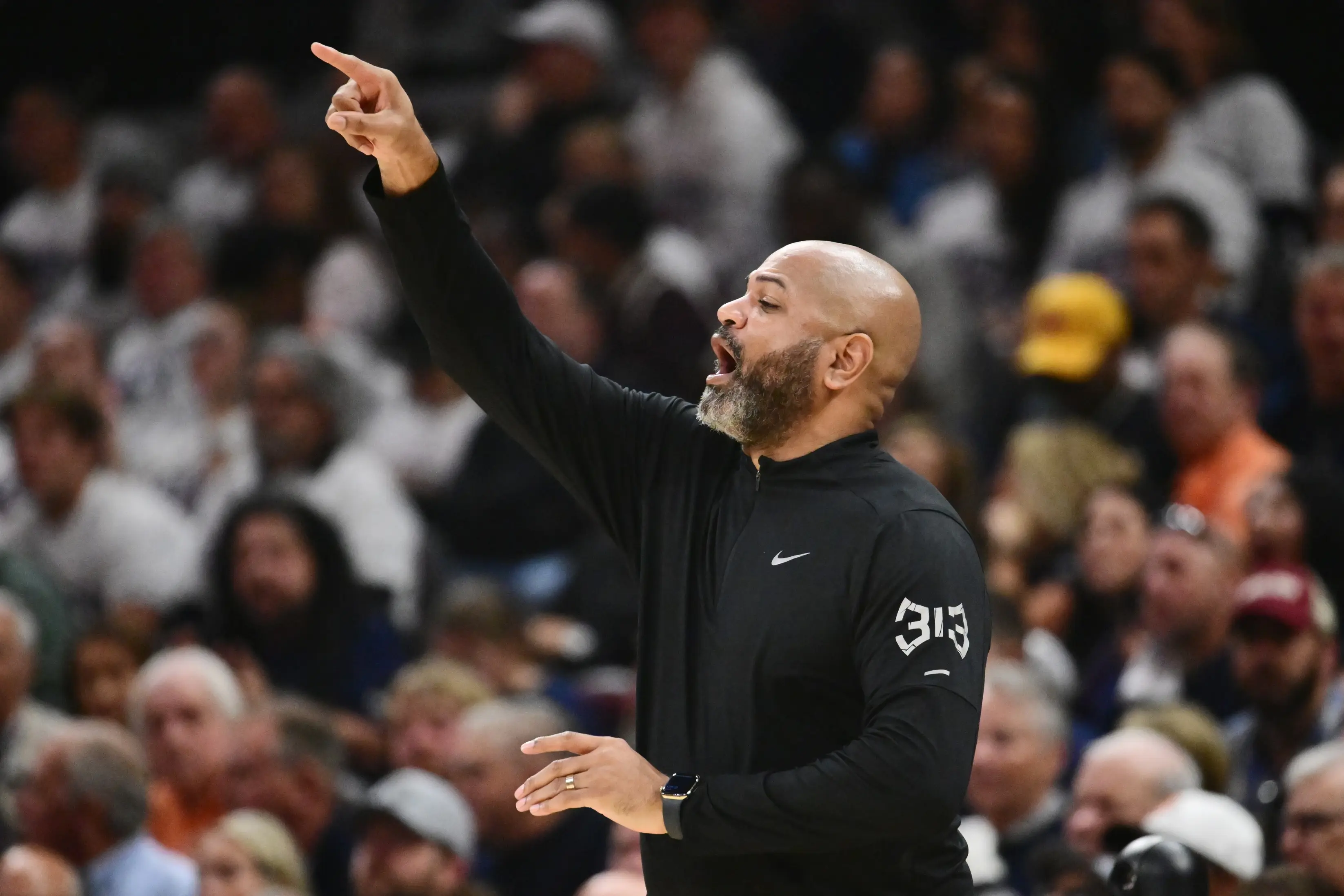
May 11, 2026; Cleveland, Ohio, USA; Detroit Pistons head coach J.B. Bickerstaff reacts during the first half against the Cleveland Cavaliers in game four of the second round of the 2026 NBA Playoffs at Rocket Arena. Mandatory Credit: Ken Blaze-Imagn Images
When Tom Dundon hired Micah Nori as Portland Trail Blazers head coach, he didn’t just fill a vacancy. According to Detroit Pistons coach and NBCA president J.B. Bickerstaff, he may have struck a blow against the entire coaching profession.
Nori, 52, is a first-time head coach. His contract includes only one guaranteed year, with team options on years 2 and 3, and a below-market base salary offset by performance incentives. For Bickerstaff, the structure is more than just a bad deal — it’s a dangerous signal. « How do you hold players accountable when it looks like you are easily replaced? » he told ESPN. He went further, calling Dundon’s approach « a slap in the face to our value, » warning that it creates a « substitute teacher » mentality that undermines coaching authority from day one.
Multiple head coaches around the league reportedly share these concerns privately, though none were willing to go on record. Chris Finch, Nori’s former boss with the Minnesota Timberwolves, defended his colleague’s decision, saying he « chased opportunity, not money » and « bet on himself. » Rick Carlisle praised Nori personally but declined to address the contract structure. The silence speaks volumes.
Dundon’s Cost-Cutting Pattern Raises Deeper Questions
Nori’s contract doesn’t exist in a vacuum. Since taking over the franchise just two months ago, Dundon has laid off approximately 70 employees, citing a « bloated » organization. He refused to travel two-way players to San Antonio for the opening playoff games against the Spurs — a decision he later admitted was « a mistake. » He declined to cover late checkout fees for staff on a road trip to Phoenix, then doubled down when criticized: « If that’s too hard for people, then I’m not right for them. » The media’s nickname for him — « El Cheapo » — has stuck. Perhaps most troubling, while interim coach Tiago Splitter was guiding the team through the postseason, Dundon was simultaneously negotiating with multiple coaching candidates, including mid-major college coaches, at salaries below what they were already earning.
Dundon points to his track record with the NHL‘s Carolina Hurricanes, where a year-to-year deal with Rod Brind’Amour ultimately produced a Stanley Cup. He frames his approach as strategic efficiency, not penny-pinching. ESPN‘s Marc Stein offered a sharper read: « You cannot, as an owner, get a reputation for skimping on spending. That is going to get in the way of your ability to attract talent. »
A Cautionary Tale Already Written in Seattle
The pattern Dundon is running in Portland has been seen before — and it ended in franchise destruction. When Howard Schultz bought the Seattle SuperSonics in 2001, he brought the same cost-cutting philosophy to a storied franchise established in 1967. He refused to invest in player salaries and personnel, built a culture of financial hesitation, and systematically alienated fans and talent alike. By 2008, the Sonics were gone — relocated to Oklahoma City, reborn as the Oklahoma City Thunder. Seattle lost its team permanently. Schultz’s mismanagement became one of the defining cautionary tales in American sports ownership history.
Dundon’s playbook mirrors it almost point for point. One veteran coach told ESPN he believed Nori’s deal would remain an exception rather than a precedent. Bickerstaff isn’t so sure. « Most ownership understands there is value in quality coaching, » he said. « For a new guy to come in who doesn’t have that understanding and chop at the knees of coaches is a slap in the face. »
Portland fans would be wise to pay attention. They’ve already seen this movie. It didn’t end well.










Comments (0)