

Frédéric Fauthoux: « We’ll have to integrate players after half a training session » before the double duel against Hungary
French National Team - Frédéric Fauthoux and the French national team are preparing in Nanterre for a decisive stretch against Hungary. Two games, Friday in Szombathely then Sunday in Le Mans, to position themselves ideally towards qualification for the 2027 World Cup.
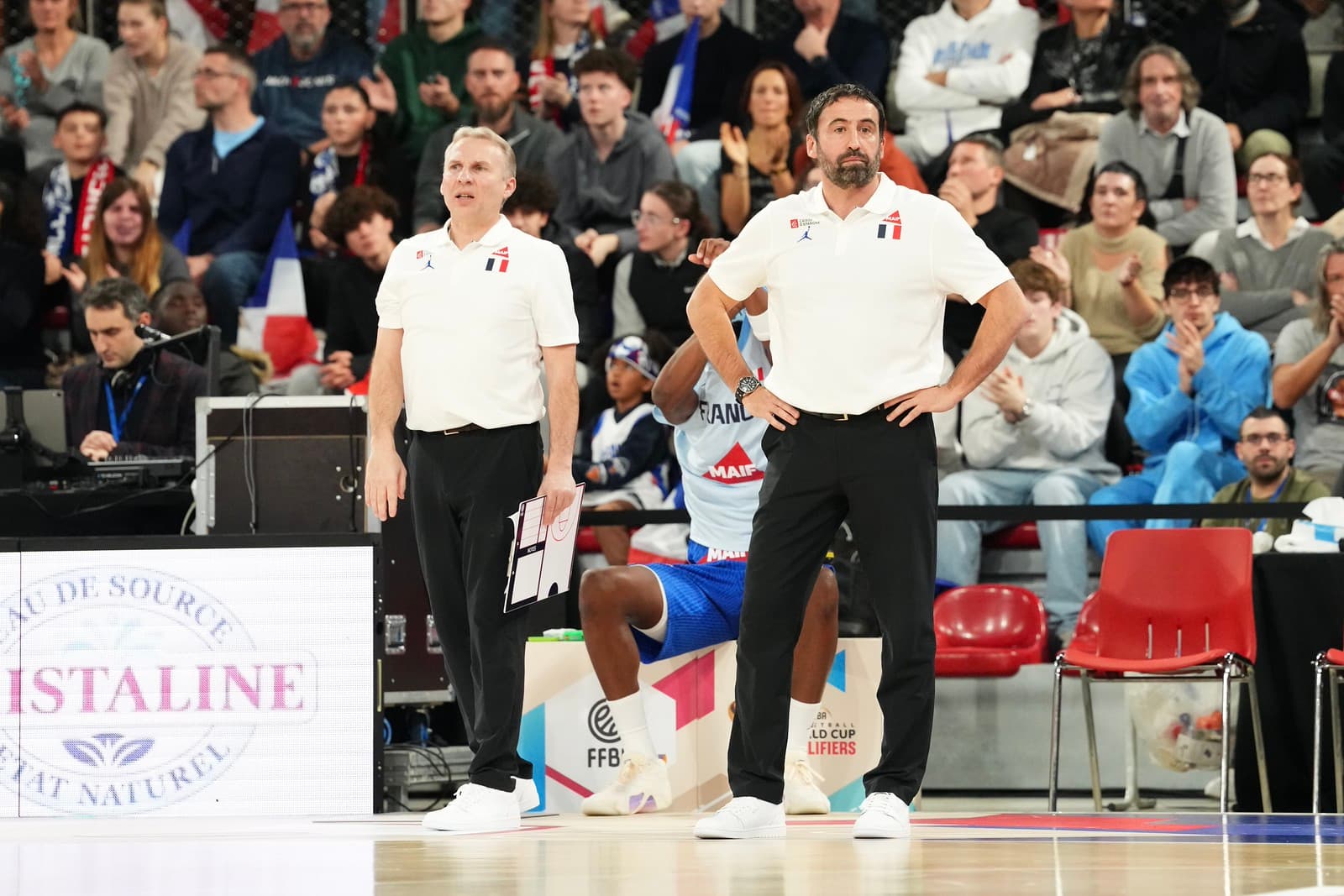
Photo Credit : Baptiste Da Costa
Less than 24 hours after the Leaders Cup, Les Blues flipped the switch back to national team mode. In Nanterre, it’s been a mix of tactical work and lighthearted run-throughs—players vs. staff, some laughs mixed in—but the edge has been building. Because the stakes are real: two games against an unbeaten Hungary, first in Szombathely on Friday, then back in Le Mans on Sunday.
At a press conference hosted by the FFBB, Frédéric Fauthoux didn’t sidestep anything.
Strazel’s absence and the puzzle of windows
Asked about Matthew Strazel’s absence, Fauthoux didn’t leave much gray area. “Once Sylvain (Francisco) was available for both games, there wasn’t much sense in bringing Matthew in just for the second one,” he said. “Even with limited practice time, there’s prep work—and you also have to respect the guys who are there for the entire window.”
It’s a balancing act the staff is clearly leaning into: continuity over patchwork. “That’s always the tricky part,” Fauthoux added. “You’ve got players committing for the full week, and others who might come in for a single session. Once Sylvain could play both, there was no need to bring Matthew in late.”
Same thinking with Nadir Hifi, a name the staff had on its radar. “Of course we considered him,” Fauthoux said. “But we needed guys for the whole week. In the end, they released Amath (Mbaye), who was one of the main options we wanted.” The message is pretty clear: full availability or nothing—an approach shaped as much by principle as by the tight constraints of international windows.
Hungary, a model of continuity
With back-to-back wins over Finland and Belgium, Hungary rolls in unbeaten and brimming with confidence. For Frédéric Fauthoux, the real challenge isn’t star power—it’s continuity. “They don’t change much,” he said. “That’s their strength. It’s a team that knows itself, that plays together, that’s already beaten Finland at home.”
By contrast, France is still stitching things together on the fly. “We’re always juggling,” Fauthoux admitted. Between injuries and absences, the group keeps shifting. “We tried to keep a core from the first window. We would’ve liked to have Lionel (Gaudoux) and Mathis (Dossou-Yovo), but injuries got in the way. The guys who came in are valuable—but they haven’t played together much. That’s the challenge.”
Still, the ambition hasn’t wavered. “We have what it takes to win both games,” Fauthoux said. “And that’s the plan.”
Paul Lacombe, more than just athletic reinforcement
Paul Lacombe’s presence raised some eyebrows—even for the player himself—but Fauthoux frames it as a structural call more than a surprise. “First, he’s here because of his performances with his club, since Nanterre is second in the championship, and Paul is having a good season.”
With Andrew Albicy stepping away, a steady relay was needed. “We also needed a player who knows how to unite the new generation and the old generation, and who also knows these windows. Paul is the perfect example of a player who has international experience and who has the ability to unite and create a group.”
And for Fauthoux, that piece matters just as much as anything on the court: “A group is not just the addition of good basketball players, it’s also knowing how to create a mindset and a collective.”
No joker burned, but an obligation to deliver results
Overseas players as additional wealth
More and more players in the French pool are logging minutes abroad. It adds a layer of logistical complexity—but for Fauthoux, it’s a clear net positive on the court. “No, on the contrary. It can only bring added value to their knowledge of the game.” Still, he points back to a shared foundation: “We must never forget that they were all trained in France for a very long time. So, we still have a game academy and very specific game characteristics.”
From there, it’s about expanding the toolkit. “The fact that they play abroad, I find it’s an important added value compared to their know-how afterwards on the court. (…) It gives an even wider palette on the game we can offer.”
The through line is pretty clear: collective first, constant adjustment, and real ambition. Against a Hungary team built on continuity and confidence, the Blues know the margin is thin—execution, discipline, and clarity will decide whether they stay on track toward the 2027 World Cup.
In Nanterre,
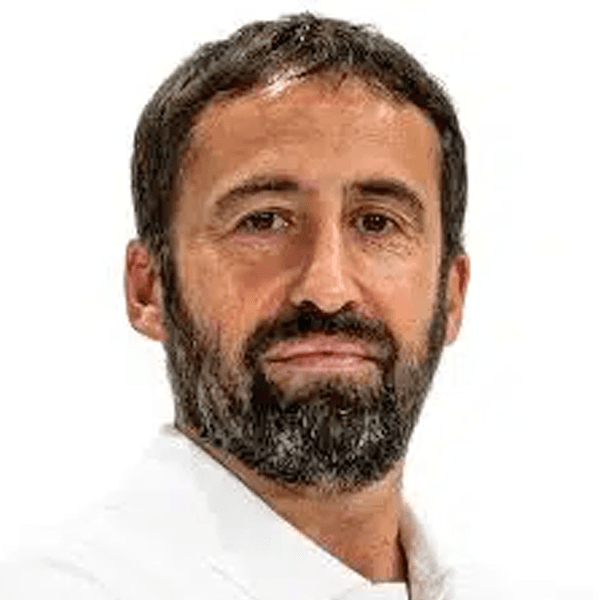


Arthur Puybertier is the rookie journalist at BeBasket. He closely follows basketball news, from Nationale 1 all the way to the NCAA, NBA, and WNBA! He analyzes games and transfers with a solid sports culture and an informed perspective on the issues in the sport. This season, he will also cover the EuroLeague and Betclic ELITE from the Adidas Arena and the Palais des Sports Maurice Thorez, to bring you the latest news up close.



Comments (0)