
What $12.5 billion for the Lakers says about the league the NBA wants to build in Europe
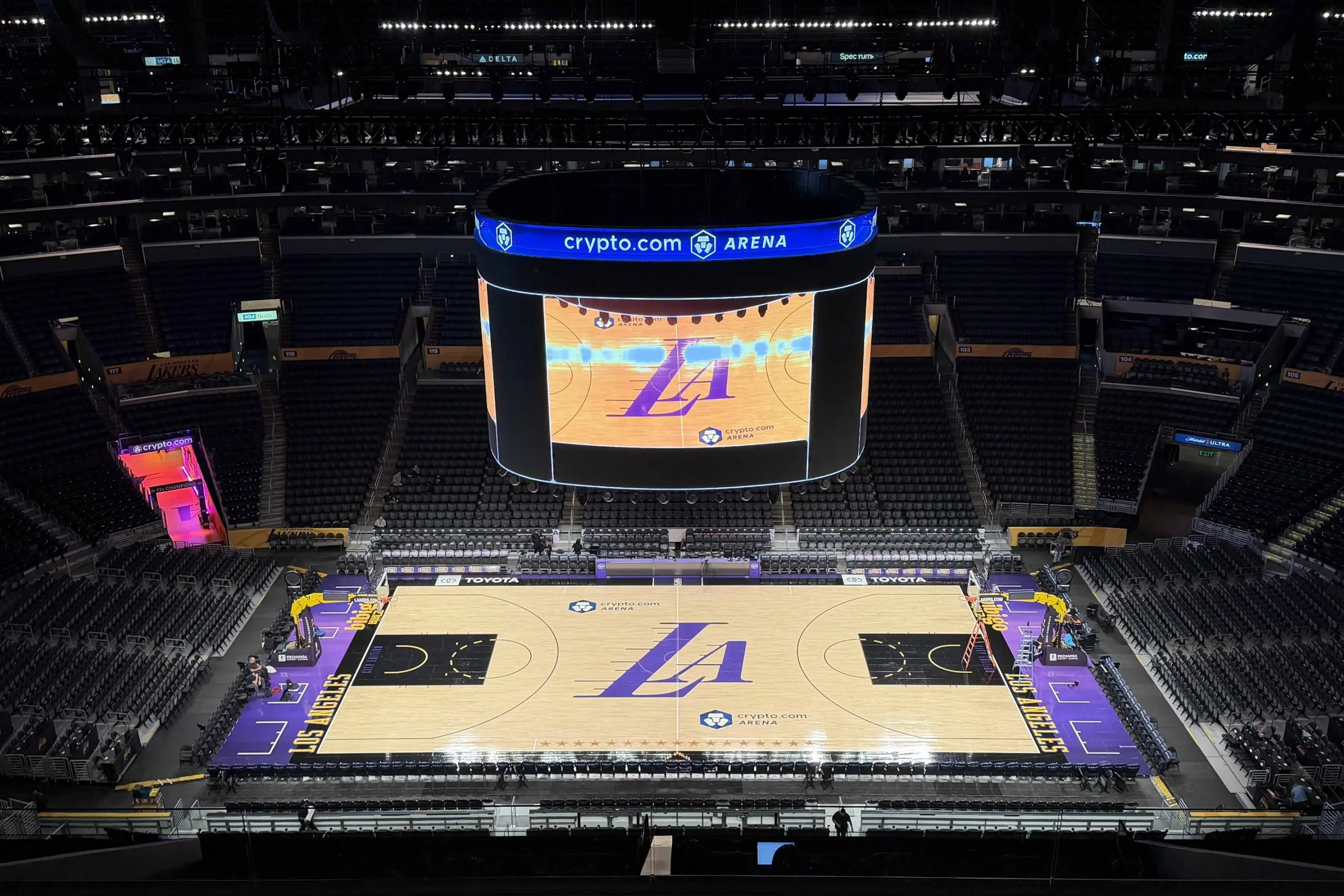
Mar 3, 2026; Los Angeles, California, USA; A general overall view of the Los Angeles Lakers city edition logo on the court and video board at Crypto.com Arena.
Bob Iger and Josh Kushner have agreed to buy a controlling stake in the Los Angeles Lakers from Mark Walter, in a deal valuing the franchise at $12.5 billion, according to CBS Sports. Semafor confirmed the figure on August 12, calling it a new record for any sports franchise, while the Washington Post noted the sale arrives “just months after” the previous one. That timing is the real story here, not the number itself.
The math of a record sale
Walter bought majority control of the Los Angeles Lakers from the Buss family at a $10 billion valuation, a deal ESPN reported in June 2025 and the NBA formally approved that October, per Sportico, which also noted the Buss family retained roughly a 15% stake. Roughly 14 months later, Walter is selling to Iger and Kushner at $12.5 billion — a $2.5 billion gain, or a 25% jump in valuation. For context, Sportico puts the average NBA franchise value at $5.51 billion, with every one of the league’s 30 teams worth at least $3 billion. The Lakers sale isn’t just a record; it’s a record sitting well outside the NBA’s own normal range.
NBA Europe’s very different arithmetic
Compare that to the numbers attached to NBA Europe, the joint venture the NBA is building with FIBA for an October 2027 launch across 10 to 12 franchises in markets including France, Germany, Italy, Spain, Turkey and Greece. Sports Business Journal and The Athletic both put the entry cost — the franchise fee alone — at $500 million to $1 billion per team. Even at the top of that range, one NBA Europe franchise costs roughly a twelfth of what the Lakers just sold for. And per Spobis, that fee doesn’t include what an owner still has to spend on arenas, operations, staffing and fan engagement.
The upside case is real but regional, not franchise-scale: a study cited by Daily Sabah and Türkiye Today projects $2.2 billion in economic impact for Istanbul between 2027 and 2036 if the city lands a team, plus $819 million added to Turkey’s GDP — an economy-wide projection, not a club valuation.
Then there’s the club-level reality NBA Europe would be layering on top of. Fenerbahce’s men’s basketball department closed the 2025-2026 season with a profit of about €3.8 million, according to Eurohoops and BasketNews — turning around a previously projected loss of roughly €5.7 million, per basketballsphere.com. That a top EuroLeague club finishing in the black is treated as notable tells its own story about the sport’s current economics, set against a single NBA sale price measured in billions.
The mismatch is structural as much as financial. NBA Europe’s fee range assumes private ownership groups capable of writing a nine- or ten-figure check; EuroLeague clubs are largely member-owned, affiliated with multi-sport football clubs — Fenerbahce’s basketball section is a department of one — or tied to municipal and civic structures. Nothing in the sourced figures says $12.5 billion makes a European league impossible — but it does make clear how much ownership architecture, not just capital, still has to be built before the two economies meet in the middle.



















Comments (0)