
Timberwolves Trade Julius Randle to Nets and Lock Up Ayo Dosunmu on $112 Million Deal
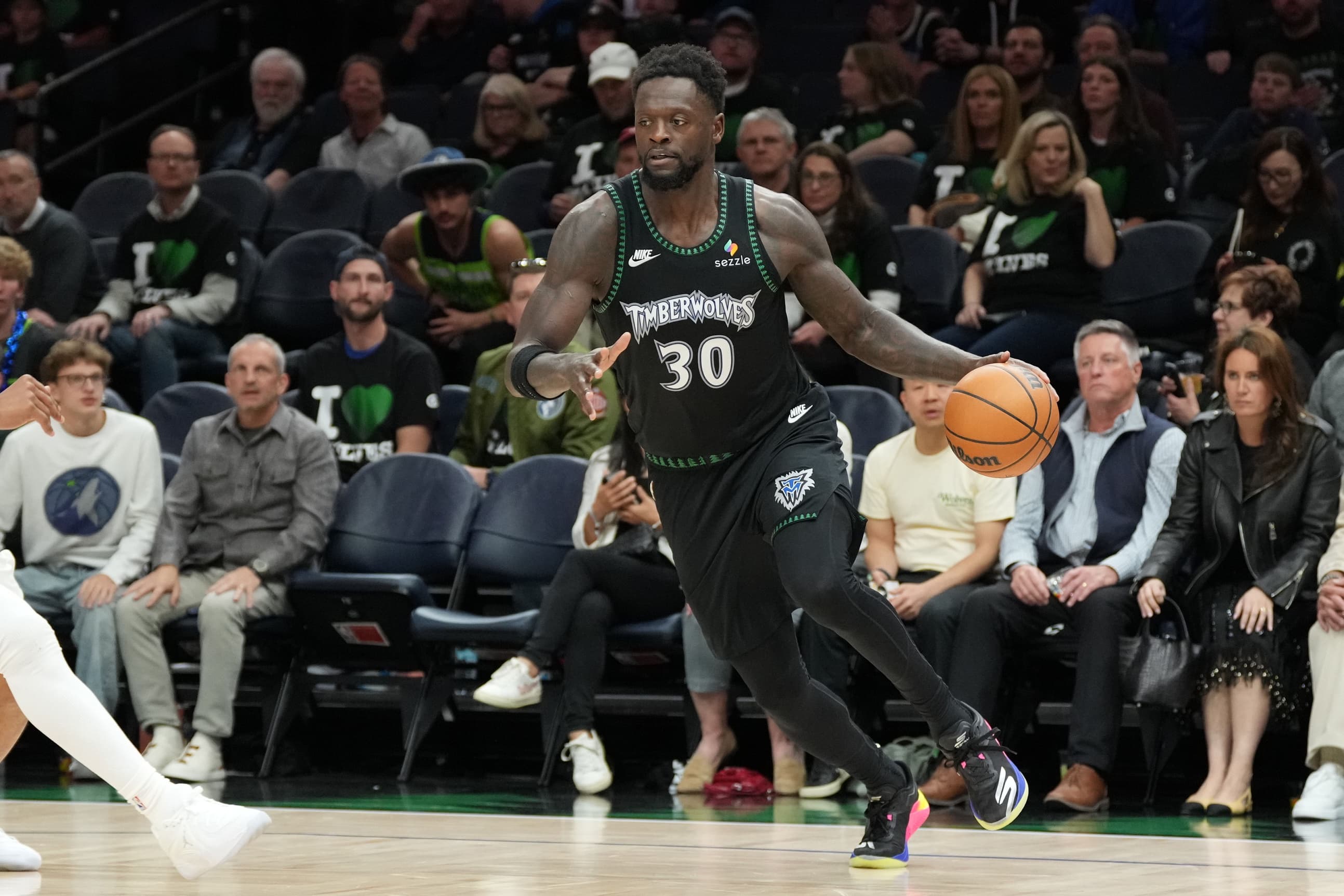
May 8, 2026; Minneapolis, Minnesota, USA; Minnesota Timberwolves forward Julius Randle (30) dribbles against the San Antonio Spurs in the second half during game three of the second round of the 2026 NBA Playoffs at Target Center. Mandatory Credit: Jesse Johnson-Imagn Images
The Minnesota Timberwolves have made their offseason priorities crystal clear. By trading Julius Randle to the Brooklyn Nets in a three-team deal involving the Chicago Bulls, the Timberwolves generated a $33 million trade exception and the necessary salary cap space to reshape their roster around a player who genuinely earned their trust: Ayo Dosunmu.
Moving On from Randle
Julius Randle spent two seasons in Minnesota after arriving with significant expectations. While he averaged 20.0 points per game, his efficiency told a different story — a 39% shooting mark in the 2026 playoffs raised serious questions about his fit within the Timberwolves’ system at the highest level of competition. For a franchise with championship ambitions, those numbers were difficult to ignore.
- Position : Power Forward, Center
- Height : 203 cm
- Age : 31 y/o
- Nationality : United States
- Club : Minnesota Timberwolves
Stats 2025-2026 / NBA
| PTS | 21.1 | #31 |
|---|---|---|
| REB | 6.7 | #61 |
| AST | 5.0 | #52 |
The decision to move Randle was not made lightly, but it was made with purpose. The three-team structure of the deal, which brought Brooklyn into the equation alongside Chicago, allowed Minnesota to extract maximum financial flexibility rather than simply absorbing a difficult contract situation. The resulting $33 million trade exception gives the front office meaningful tools to work with going forward.
Dosunmu Becomes the Cornerstone
The Randle trade was never just about subtraction — it was about enabling a specific addition. Ayo Dosunmu, acquired from the Chicago Bulls at the February 2026 trade deadline, quickly established himself as a genuine contributor in Minnesota’s playoff run. His fit alongside the existing core was evident, and the Timberwolves wasted no time making their commitment official.
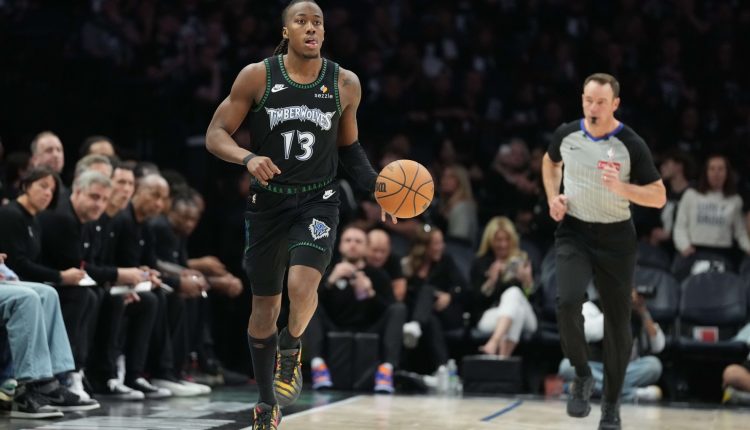
Dosunmu’s five-year, $112 million contract keeps him in Minnesota through what should be the prime years of his career. He was set to hit free agency, which would have opened the door for other teams to make their pitch. By using the cap space unlocked through the Randle trade, Minnesota removed that uncertainty entirely.
- Position : Shooting Guard
- Height : 196 cm
- Age : 26 y/o
- Nationality : United States
- Club : Chicago Bulls, Minnesota Timberwolves
Stats 2025-2026 / NBA
| PTS | 14.8 | #103 |
|---|---|---|
| REB | 3.4 | #255 |
| AST | 3.6 | #98 |
The contrast between the two moves is striking. Randle, a high-volume scorer who struggled when the margin for error shrinks in the playoffs, is replaced in the financial structure by a guard who demonstrated exactly the kind of playoff reliability the Timberwolves are looking to build around. It reflects a front office that is reading its own roster honestly and acting on those conclusions.
A Coherent Vision
What makes this sequence of moves notable is its internal logic. Rather than simply reacting to market conditions or trimming payroll for its own sake, Minnesota identified a problem — Randle’s playoff underperformance — and connected its solution directly to an opportunity — retaining Dosunmu before free agency. The two decisions are inseparable, and that coherence suggests a front office operating with a clear picture of what it wants its team to look like.
For the Timberwolves, the 2025-2026 season begins with a leaner, more intentional roster. Whether that translates into deeper playoff success remains to be seen, but the direction of travel is no longer ambiguous.













Comments (0)