
The Top 10 European domestic basketball leagues for the 2026-27 season
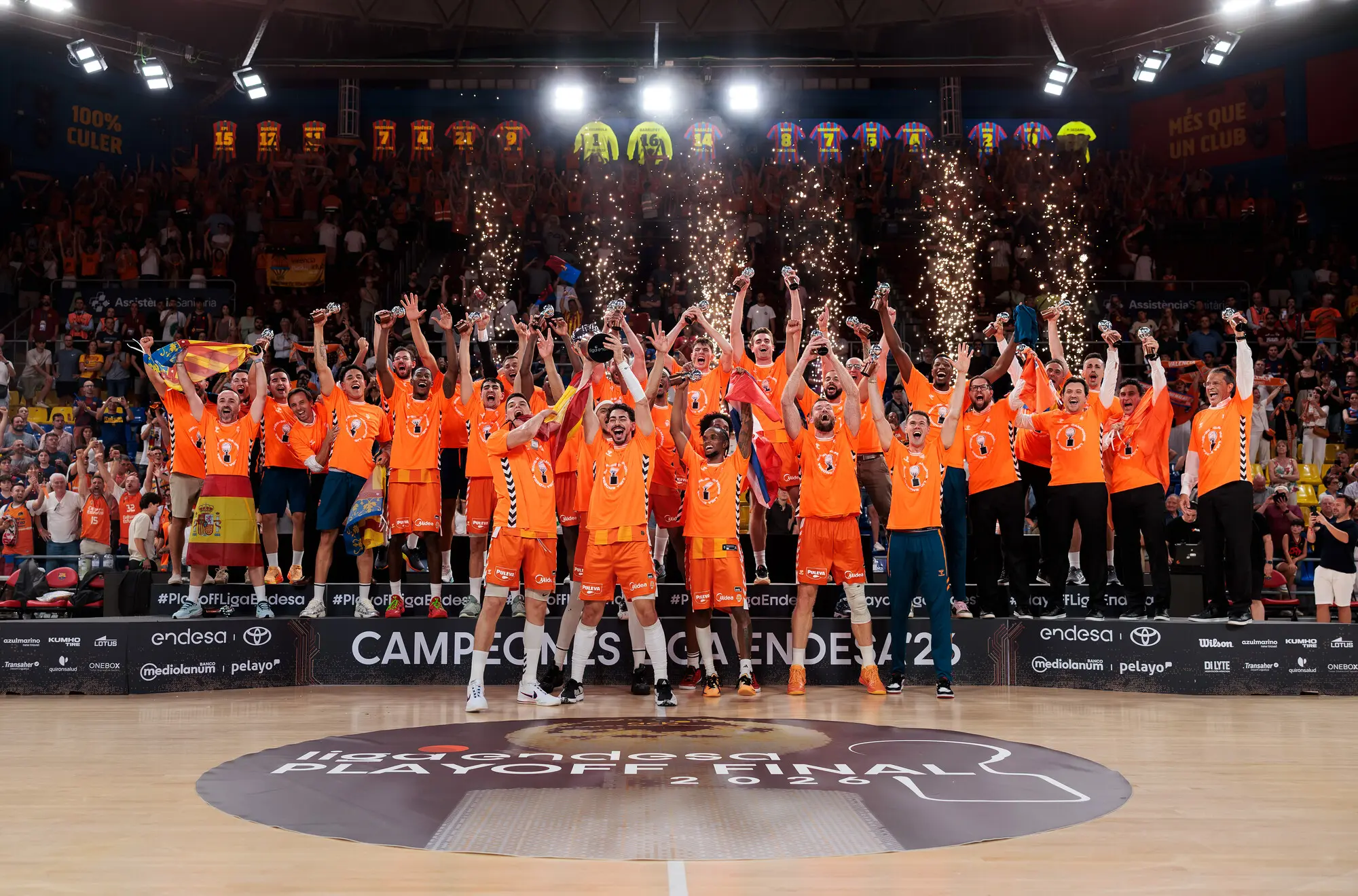
Europe has never lacked basketball powerhouses, but ranking its domestic leagues requires looking well beyond the biggest EuroLeague clubs. European results matter, but so do competitive balance, roster quality, attendance, financial strength, young talent and the level of opposition teams face every week.
Heading into the 2026-27 season, Spain remains in a category of its own. Turkey has strengthened its position behind the Liga Endesa, while France, Greece and Italy make up a much more debatable second tier.
Here is BeBasketball’s ranking of the ten strongest domestic leagues in Europe.
1. Spain – Liga Endesa
There is little debate over first place.
The Liga Endesa combines elite clubs, depth, strong attendances and a basketball culture that few competitions can match. Real Madrid, FC Barcelona, Baskonia and Valencia Basket give Spain four major European organisations, but the strength of the league goes much further down the standings.
Spanish teams routinely face demanding domestic games between European fixtures, and even the clubs outside EuroLeague can assemble high-level rosters. Add lively arenas, established organisations and considerable coaching quality, and the ACB remains Europe’s benchmark domestic competition.
2. Turkey – Basketbol Süper Ligi
Turkey may not offer the same overall package as Spain, but its top-end talent is difficult to match.
Fenerbahçe and Anadolu Efes remain two major European forces, while Beşiktaş has joined them in EuroLeague for 2026-27. Several other clubs possess significant financial resources and rosters capable of competing deep into either the EuroCup or Basketball Champions League.
The league has its flaws. Domestic games are not always played in full arenas, Monday fixtures following European games can lack atmosphere and financial stability has historically varied greatly between organisations.
But purely in terms of players, budgets and the quality of its leading teams, Turkey deserves second place.
3. France – Betclic ELITE
French basketball lost its richest club with AS Monaco's disappearance, while ASVEL was prevented from operating with a €59 million budget. But those two situations also highlight one of the Betclic ELITE's defining characteristics: French clubs operate under particularly strict financial regulations enforced by an independent control body.
Among Europe's leading domestic leagues, Germany is one of the rare competitions to impose a similarly restrictive financial framework. Elsewhere, clubs can operate with substantial annual losses. Even in Spain, the continent's strongest league, Real Madrid's basketball section has regularly posted losses of around €25 million per season, while FC Barcelona has also absorbed major losses and has subsequently had to reduce spending.
France has chosen a different model. Clubs have to demonstrate that their budgets are sustainable, which limits the possibility of covering structural deficits indefinitely through ownership funding. Monaco's disappearance obviously weakened the championship at the very top, but the rules behind it are also designed to protect the league as a whole.
That financial discipline has not prevented the Betclic ELITE from remaining highly competitive. JL Bourg enters 2026-27 as the reigning EuroCup champion, Paris Basketball and ASVEL remain major organisations, while budgets continue to grow further down the standings. Even promoted side Roanne starts the season with a budget of around €6.2 million and a roster built to compete immediately.
The league's other major asset is its talent pool. Nathan Soliman, Hugo Yimga-Moukouri, Klark Riethauser and Noa Kouakou-Heugue are among the prospects to watch in 2026-27, continuing France's ability to develop players for the highest European and international levels.
Another important sign of the league’s appeal is France’s ability, so far, to retain several of its best NBA prospects despite the NCAA’s growing financial power. Some of the highest-rated young players in the world have chosen to remain in Betclic ELITE even when American colleges were offering them more money. They also believe that playing professional basketball in France can provide better development, meaningful responsibilities and perhaps even greater exposure ahead of the NBA Draft.
That choice is particularly significant at a time when the NCAA is increasingly attracting some of Europe’s best young players. Even Spain has been affected: Nikola Kusturica, one of the most highly regarded prospects of his generation, left FC Barcelona to join UCLA in 2026.
Betclic ELITE’s ability to retain several of its most coveted prospects is therefore another argument in favour of the French model. At a time when American money is reshaping European player development, some of the continent’s best young players still see France as a prime environment to develop, play meaningful professional basketball and prepare for the next stage of their careers.
Most importantly, the strength of the Betclic ELITE is not limited to its leading clubs. Arenas are regularly well attended and there are very few comfortable nights on the domestic schedule. Bottom-half teams are capable of beating championship contenders, making competitive balance one of the league's strongest characteristics.
France no longer has the financial outlier Monaco once represented, nor can its biggest clubs spend without limits. But that is also part of the argument for ranking the Betclic ELITE third: it combines strict financial oversight, rising budgets, strong crowds, elite young talent and a level of week-to-week parity that very few European leagues can match.
4. Greece – Greek Basketball League
There is a perfectly legitimate case for putting Greece third.
Panathinaikos and Olympiacos arguably possess two of the strongest rosters anywhere in Europe. Few leagues can match that duo at the top.
Behind them, there are also encouraging signs. AEK Athens remains an established basketball organisation, while Aris and PAOK are attempting to restore Thessaloniki's place among the major centres of European basketball.
The question is depth.
Olympiacos went through last season's regular season without losing a game, illustrating the gap that can exist between Greece's two giants and much of the competition. Attendance can also vary considerably outside the biggest fixtures.
If the ranking were based primarily on the quality of the best two teams, Greece would comfortably sit above France. When assessing an entire domestic league over a full season, we give the Betclic ELITE a narrow advantage.
5. Italy – Lega Basket Serie A
Italian basketball has history, major markets and several established clubs. What it does not yet have, in our view, is enough evidence to move ahead of France or Greece.
Olimpia Milano and Virtus Bologna remain the country's two major names, although neither currently belongs among the very best teams in EuroLeague. Venezia, Trento and Tortona provide additional quality, while the return of major basketball projects in Rome creates genuine interest for the new season.
There are nevertheless questions surrounding the overall structure of the league.
The Italian basketball landscape underwent significant change during the offseason, including the transfer of top-flight places to new Roman projects. Some arenas also remain dated compared with the infrastructure seen elsewhere in Europe.
Italy remains an excellent basketball country with good players and ambitious clubs. Fifth feels more representative of its current level.
Readers' ranking · You rank them
How would you rank the 10 best domestic basketball leagues in Europe for the 2026-27 season?
- Liga Endesa — Spain
- Basketbol Süper Ligi — Turkey
- Betclic ELITE — France
- Greek Basketball League — Greece
- Lega Basket Serie A — Italy
- ABA League — Adriatic region
- Basketball Bundesliga — Germany
- LKL — Lithuania
- Israeli Basketball Premier League — Israel
- Orlen Basket Liga — Poland
6. ABA League
Few competitions possess a basketball tradition comparable to the Adriatic League.
Partizan Belgrade and Crvena Zvezda remain major EuroLeague clubs, while Dubai has added another organisation with enormous financial resources. The former Yugoslav region also continues to produce players and coaches at an exceptional rate.
Expansion, however, has changed the competition.
With clubs now arriving from several different markets and the league operating across a broader geographical footprint, the gap between the strongest and weakest teams has increased. Its best games remain among the most intense in Europe, but the overall level is less consistent than it once was.
7. Germany – Basketball Bundesliga
Germany may be Europe's most structurally reliable major basketball league.
Clubs are generally well organised, arenas draw healthy crowds and financial controls provide a degree of stability that is not guaranteed everywhere on the continent. German basketball has also benefited from the country's continued development as an elite player-producing nation.
The Bundesliga nevertheless lacks the concentration of talent currently found in France and the elite-level power available in Turkey, Spain or Greece.
It is deep, stable and increasingly attractive. Seventh place reflects the absence of multiple genuinely elite European teams rather than any structural weakness.
8. Lithuania – LKL
Few countries have a stronger relationship with basketball than Lithuania.
Žalgiris Kaunas remains the centrepiece of the league, while Rytas Vilnius ensures there is genuine competition at the top and Lithuanian clubs continue to develop players at a remarkable rate considering the country's population.
Its limitation is simply the size of the market.
There is only so much financial depth available, and the gap between Lithuania's leading organisations and much of the rest of the competition remains significant. Its culture and development system keep it comfortably inside our Top 10.
9. Israel – Israeli Basketball Premier League
At the top, Israel has considerable strength.
Maccabi Tel Aviv, Hapoel Tel Aviv and Hapoel Jerusalem are capable of attracting high-level players and operating with budgets that compare favourably with clubs in larger European markets.
The domestic competition itself is less deep. The gap in resources between the biggest organisations and the rest of the league remains important, making it difficult to place Israel above the more balanced competitions ahead of it.
Still, the quality available at the top makes ninth place difficult to dispute.
10. Poland – Orlen Basket Liga
Poland completes our Top 10.
Its league does not feature the individual European giants found elsewhere, but the domestic competition remains competitive and benefits from a sizeable market. Several clubs can challenge for trophies, and Poland continues to attract experienced foreign players alongside its domestic core.
Its European results still need to improve for the league to climb higher, but among the competitions immediately outside Europe's traditional basketball powers, Poland remains one of the strongest.
BeBasketball's Top 10 European domestic leagues
Liga Endesa – Spain
Basketbol Süper Ligi – Turkey
Betclic ELITE – France
Greek Basketball League – Greece
Lega Basket Serie A – Italy
ABA League – Adriatic region
Basketball Bundesliga – Germany
LKL – Lithuania
Israeli Basketball Premier League – Israel
Orlen Basket Liga – Poland
Any ranking of domestic leagues inevitably depends on what is valued most.
If EuroLeague contenders are the main criterion, Greece could easily move ahead of France. If financial power carries greater weight, Turkey closes some of the gap with Spain. If stability and infrastructure dominate the discussion, Germany deserves additional consideration.
Our choice is to assess the full domestic product.
That is why France remains third. The Betclic ELITE may have lost its biggest spender, but its competitive balance, packed arenas, young talent, improving budgets and recent European success still make it one of the strongest week-to-week basketball competitions on the continent.




































Comments (0)