
NCAA’s « Five-for-Five » Rule Reshapes College Basketball Eligibility Forever
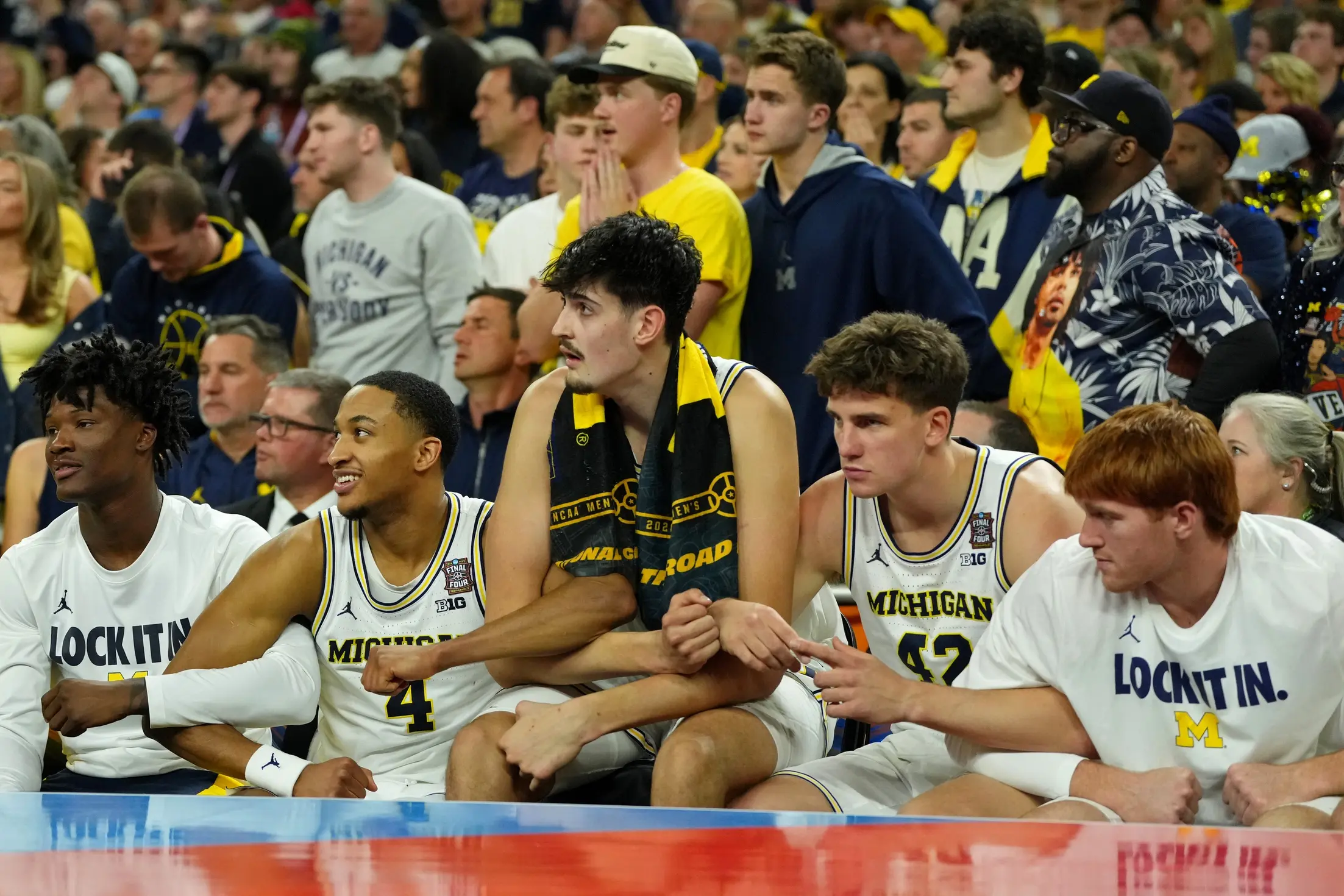
Apr 6, 2026; Indianapolis, IN, USA; The Michigan Wolverines bench watches the game during the second half in the national championship of the Final Four of the men’s 2026 NCAA Tournament between the and the Michigan Wolverines at Lucas Oil Stadium. Mandatory Credit: Bob Donnan-Imagn Images
The NCAA has officially pulled the trigger on one of the most sweeping eligibility reforms in college athletics history. On June 23, 2026, the Division I Cabinet unanimously approved what is now widely known as the « five-for-five rule » — a new age-based eligibility model that gives athletes five years to complete five seasons of competition. The clock, crucially, starts at high school graduation rather than enrollment.
The intent is clear: bring order to a system that had grown increasingly chaotic. Years of transfers, strategic redshirt decisions, injury waivers, and NIL-driven extensions had stretched college rosters into something far removed from the original concept of amateur athletics. This rule draws a hard line.
A Clean Break — But Not for Everyone
The most immediate consequence is the elimination of the traditional redshirt season. Under the old system, players could sit out a year without burning eligibility, allowing for development time or recovery from injury. Hardship waivers, another long-used mechanism, are also gone. What remains is a straightforward five-year window, no exceptions.
The rule does carve out one notable allowance: international players with professional experience can still enroll in college. But for domestic athletes, the path is now strictly defined.
The human cost of this change becomes vivid when you consider cases like Tyler Shough, who needed seven years of college football to develop into a starting NFL quarterback. Under the new model, that kind of extended development arc simply would not be possible.
Legal Battles Looming Over the New Model
The rule may be approved, but it is far from settled. Two prominent attorneys are already preparing lawsuits on behalf of at least 50 players who stand to be disadvantaged by the transition. Their core argument is straightforward and potentially compelling: athletes who already graduated under the old eligibility framework should not have their futures retroactively altered by a new age-based clock.
College basketball players who just completed their fourth and final year of eligibility could, if a legal challenge succeeds, find themselves eligible for an additional season in 2026-2027. That possibility alone is enough to keep roster planning across the country in a state of uncertainty.
The equity argument at the heart of these lawsuits is difficult to dismiss. Players who made decisions — redshirting, transferring, managing injuries — based on the rules that existed at the time now find themselves penalized for choices that were entirely legitimate when made. Courts have shown increasing willingness to scrutinize NCAA governance in recent years, and this case may prove no different.
Winners, Losers, and an Uncertain Road Ahead
For younger players and teams seeking roster continuity, the new model offers real advantages. Injured athletes can return without sacrificing a year of eligibility. Programs can plan around more predictable timelines.
But for older players, recent graduates, and those who already used redshirt seasons, the calculus is far less favorable. They built their college careers around a set of rules that no longer exists.
The five-for-five model represents a genuine structural shift in how college basketball — and college athletics broadly — will operate. Whether it survives the courtroom scrutiny it is about to face is another question entirely.












Comments (0)