
Kyle Riddley’s Efficient Night Reveals the Depth Advantage in Nantes’ Blowout of La Rochelle

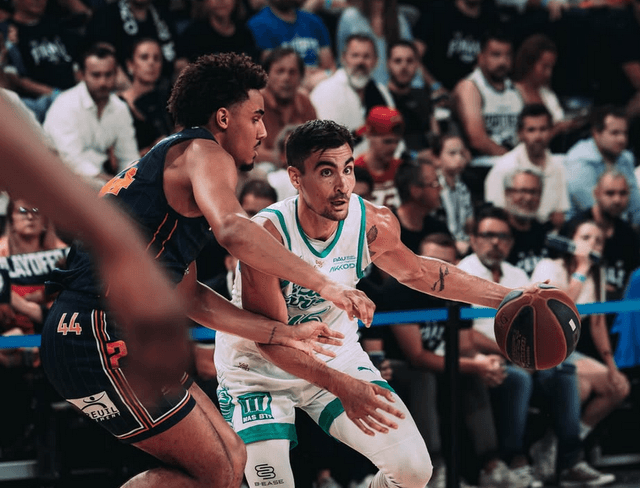
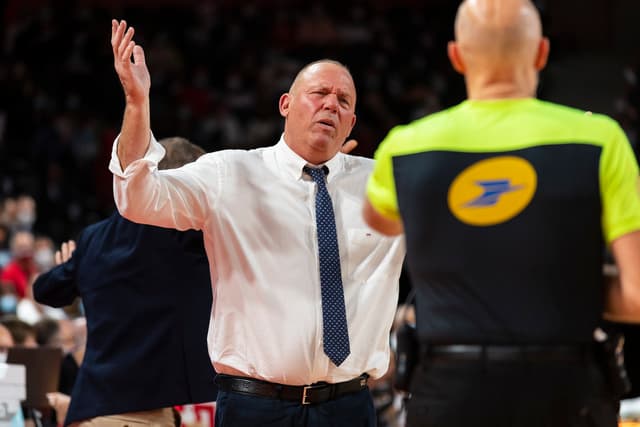
Kyle Riddley’s Efficient Night Reveals the Depth Advantage in Nantes’ big win against La Rochelle Photo Credit: Nantes Basket Hermine
There was nothing particularly dramatic about what Nantes did to La Rochelle on Tuesday night. No furious comeback, no last-second heroics, no individual tour de force that will live in highlight reels. Instead, what unfolded was something more instructive: a blueprint for how sustained offensive balance and legitimate bench scoring create separation in a league where depth remains a luxury.
The Riddley Problem
For La Rochelle, the problem wasn’t that Kyle Riddley had a great night—though he did, with 23 points in 23.2 minutes. The problem was that he was the bench having that night. Coming off the second unit, Riddley didn’t need to be the focal point of an elaborate offensive system. He could operate in the margins, catch rhythm, and punish defenders who briefly lapsed. That’s a tax on opposing coaches that compounds quickly over 40 minutes.
Nantes 107 - 89 La Rochelle · ELITE 2 · 19/05/2026
| Game | PTS | REB | AST | |
|---|---|---|---|---|
| Nantes | Nathan Soliman | 14 | 5 | 1 |
| Lucas Bourhis | 9 | 2 | 5 | |
| Dylan Van Eyck | 14 | 2 | 6 | |
| Jean-Fabrice Dossou | 18 | 9 | 0 | |
| Bubu Palo | 4 | 2 | 4 | |
| David Gassaud | 4 | 0 | 1 | |
| Christopher Manerlax | 6 | 2 | 1 | |
| Hugo Mienandi | 4 | 3 | 4 | |
| Kyle Riddley | 23 | 2 | 4 | |
| Raphaël Boum | 2 | 0 | 0 | |
| Mathys Kangudia | 9 | 0 | 4 | |
| La Rochelle | Jérôme Sanchez | 0 | 3 | 3 |
| Yannis Allard | 6 | 3 | 2 | |
| Andréa Samat | 5 | 0 | 1 | |
| Robert Ford III | 2 | 1 | 5 | |
| Ibrahima Haidara | 13 | 4 | 1 | |
| Maxence Lemoine | 14 | 1 | 7 | |
| Tyler Thomas | 10 | 0 | 5 | |
| Anthony Racine | 19 | 1 | 1 | |
| Babacar Mbye | 10 | 5 | 0 | |
| Daniel Oladapo | 10 | 1 | 1 |
His 23 points in 23 minutes projects to roughly 40 per 40—a number that looks cleaner on a spreadsheet than it plays in reality, but one that nonetheless indicates someone knocking down shots and getting out in transition. More importantly, his presence meant that Nantes’ starting unit could set the tone without needing to carry the entire offensive load.
A Choir, Not a Solo
This is where the Nantes advantage became most obvious. Jean-Fabrice Dossou (18 points, 9 rebounds in 21.9 minutes) did heavy lifting on the glass. Nathan Soliman and Dylan Van Eyck both scored 14 points apiece in wildly different contexts—Soliman as a complementary piece, Van Eyck as a creator and facilitator with 6 assists in just 16.6 minutes. Lucas Bourhis, the quieter presence, orchestrated the offense with 5 assists while chipping in 9 points.
When your third, fourth, and fifth scorers can all hit double figures with efficiency and without needing the ball relentlessly, opponents face a geometry problem they cannot solve. La Rochelle had bodies and competence—Anthony Racine‘s 19 points were legitimate, and Maxence Lemoine‘s 14 points and 7 assists showed offensive orchestration. But they couldn’t create enough simultaneous pressure on Nantes’ defense.
The Math of 18 Points
The 107-89 final score, that 18-point margin, was less about a single collapse and more about cumulative disadvantage. Nantes wasn’t dramatically outplaying La Rochelle at any one position; they were simply slightly better, more diversified, and fresher at every position. That’s how blowouts happen in professional basketball. Not with thunder, but with a slow, relentless squeeze.
For Nantes, the message is simple: if Riddley’s efficiency translates across a season, and if this kind of distributed scoring becomes routine, they’ve built something structurally difficult to contain. For La Rochelle, it’s a reminder that effort and scattered competence aren’t enough when the opponent can simply outlast you in quality.



















Comments (0)