
[Video] Yohan Rosso mic’d up during Le Mans – Monaco: Mike James’s disqualifying foul and several exchanges seen from the inside
Nov. 20, 2025
Alexandre Lacoste
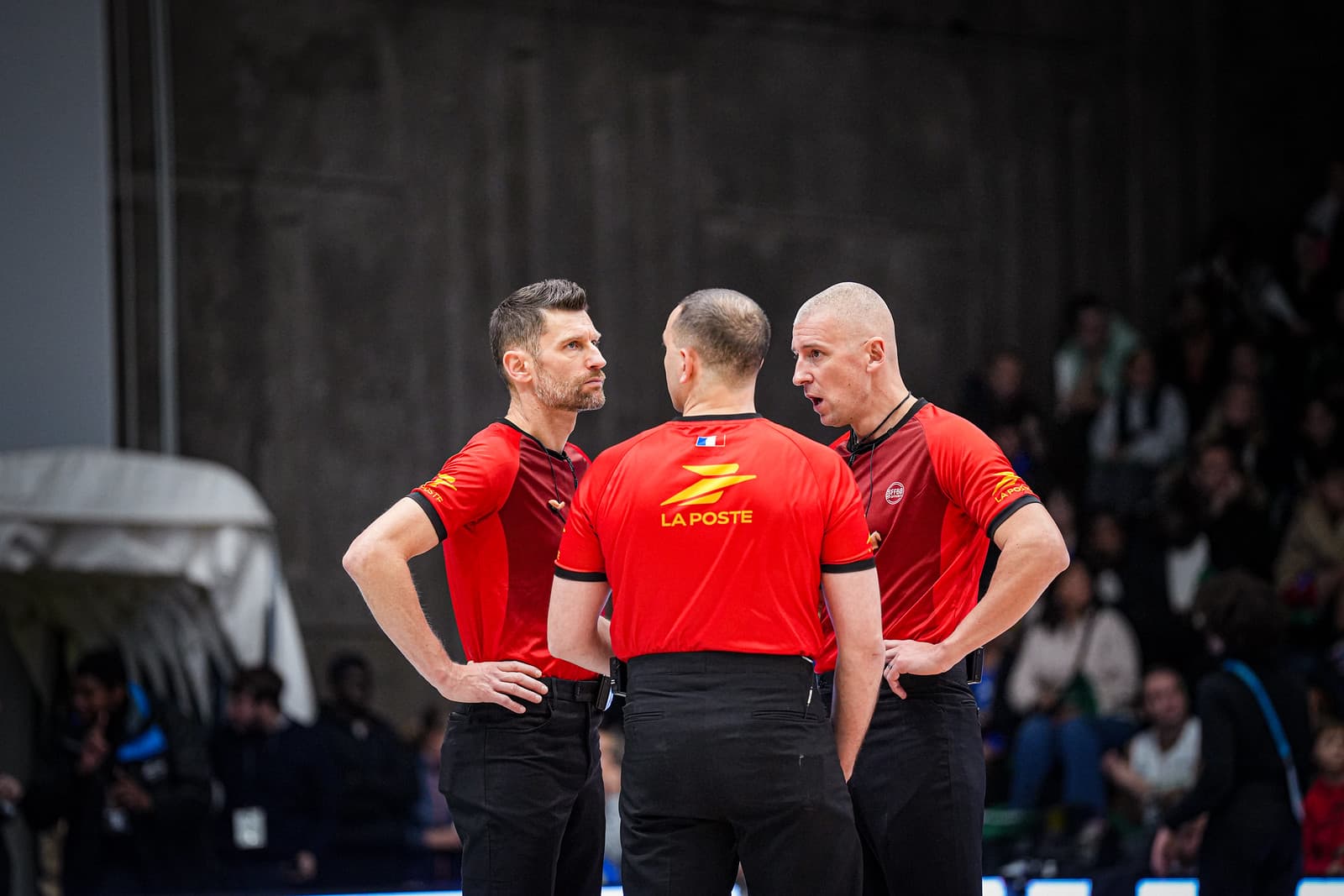
Is there more dissatisfaction with officiating this season than in the past? In the absence of objective indicators, the sentiment is shared in arenas and at press conferences. The Christmas games particularly crystallized certain tensions, to the point of putting officiating back at the center of French basketball debates.
Before the break, Sylvain Lautié didn’t hide his frustration after Nancy’s loss in Chalon-sur-Saône, in the pages of L’Est Républicain. « We lost too many balls, we didn’t spread the floor well enough. We knew it was going to be a trench battle. But I’ve rarely seen so many physical contacts on ball advances. We got demolished all game. You have to call a spade a spade. There was a lot of tolerance in what I saw tonight. »
At the same time, after Dijon’s loss in Boulazac on December 26, Antoine Eïto (1.88m, 37 years old) also spoke out, in a context marked by the ejection of his opponent David Holston. « I think today there’s an incredible communication problem between certain entities and officiating. […] I don’t think the referees aren’t working, on the contrary, but it needs to be fixed, because it’s every weekend and it’s problematic. »
🗣️ « They forbid me to speak, so I’m not speaking anymore! »
🤐 Frédéric Fauthoux after Bourg’s 0-10 – Strasbourg (via @GhislainGros)
💢 https://t.co/kvkLP3w2Oc
pic.twitter.com/TO2fbmhY8y
— BeBasket (@Be_BasketFr) January 10, 2026
At the start of 2026, an internal letter signed by Thomas Bissuel confirmed that the tension wasn’t just an external feeling. « Despite our efforts, the relationship with stakeholders has generally deteriorated over the course of games. […] It’s your lucidity, your discernment and your empathy that people need. It’s YOU that the championship needs. »
Pre-game meetings are now suspended, although informal exchanges with players and coaches remain possible. A strong signal of a climate deemed more tense than before.
For those willing to speak, mainly off the record, several referees and officials mention structural factors rather than a sudden deterioration in quality. Games are longer, more choppy, particularly with the addition of video review, increasing physical intensity and stricter application of certain rules. Where a game once lasted less than two hours, exceeding 2h15 is no longer exceptional.
And while coaches complain about it, they’re also the first to request video review, or to demand that tactical fouls to stop fast breaks be properly called, which brings teams into the penalty more quickly, and therefore more free throws.
[Video] Yohan Rosso mic’d up during Le Mans – Monaco: Mike James’s disqualifying foul and several exchanges seen from the inside
Alexandre Lacoste
Moreover, players adapt to rule changes. There are indeed more and more fouls on 3-point shots… in fast breaks, because players sense tactical fouls coming at midcourt. Another example of video reviews generated more frequently.
Basketball remains a human activity, based on error. Cycles of acceptance and contestation of officiating have always existed. The central question is therefore less about « bad officiating » than about perception and communication around decisions.
Contrary to common beliefs, French officiating has become highly professionalized. Physical and mental preparation, game viewing and re-viewing, evaluations at each game, variable assignments based on performance: everything is analyzed. The best referees are more frequently assigned to big matchups, playoffs, the Leaders Cup or the All-Star Game, with a direct impact on their compensation. Conversely, proven errors can lead to temporary suspensions.

Who are the eight professional referees in French basketball?
Alexandre Lacoste
Under the leadership of Eddie Viator, national director of officiating since 2021, and Pierre-Yves Bichon, president of the High Level Officials (HNO), there’s strong introspection in the field. Additionally, the National Union of Basketball Referees (SNAB) now represents virtually the entire profession. It’s fighting notably to allow referees to benefit from maternity leave.
Where it hurts, according to many stakeholders, is in education and communication. Players and coaches can speak immediately at press conferences. Referees, however, are subject to a strict duty of discretion. It’s impossible for them to explain a decision, let alone publicly acknowledge an error, at the risk of opening Pandora’s box.
In the NBA, certain post-game communications have helped humanize officiating. Just this Tuesday, the major league didn’t hesitate to side with Joe Mazzulla, the Boston Celtics coach who was complaining about an illegal screen not called on the decisive play by the Indiana Pacers the previous day. Conversely, the NBA doesn’t hesitate to financially sanction players for their criticism of officiating, as was the case with Jaylen Brown, the star of those same Celtics, for his statements after the loss in the previous game against the Spurs.
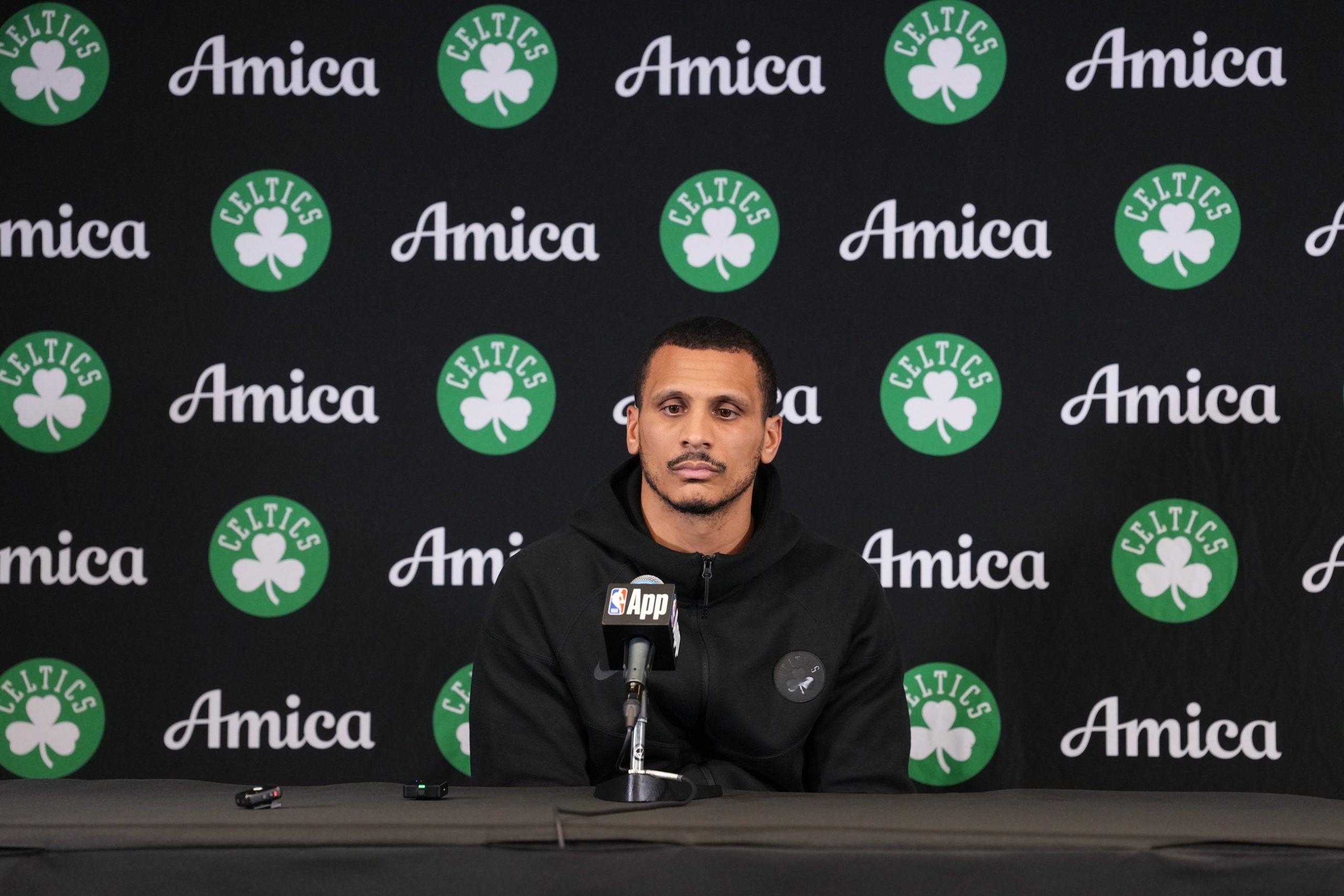
The NBA validates Mazzulla’s criticism: Siakam’s screen was illegal
Sylvain Sultat
In Europe, this culture remains embryonic. Many advocate for structured exchanges, roundtables or educational formats to better understand the constraints and reality of the profession.
At the next steering committee of the National Basketball League, officiating will be among the topics discussed. Without promising revolution, the goal is to calm an atmosphere that has become inflammatory, in an ecosystem where pressure is extreme for everyone: players, coaches… and referees.
Because ultimately, the question remains: are we witnessing a real officiating crisis, or simply greater exposure of a profession that has long remained in the shadows?




Comments (0)